
Recently, I was asked by a customer to implement support for the Genisys protocol in an industrial router product acting as a compact RTU.
The goal was to expose the router’s digital inputs and outputs to a SCADA master system over TCP/IP using Genisys communications.
As part of the project, the customer supplied:
Although having a simulator available was useful in principle, the provided testing environment proved difficult to use during active embedded development.
The Python-based simulator consisted of multiple scripts which were:
After several unsuccessful attempts to work efficiently with the provided tooling, I decided to take a different approach.
Instead of continuing to fight with external scripts, I extended the VestaTel SCADA Multi-Protocol Simulator with native Genisys protocol support.
The initial implementation focused on:
Because the simulator already contained a flexible communication framework supporting multiple industrial protocols, integrating Genisys became significantly more practical than maintaining a collection of standalone scripts.
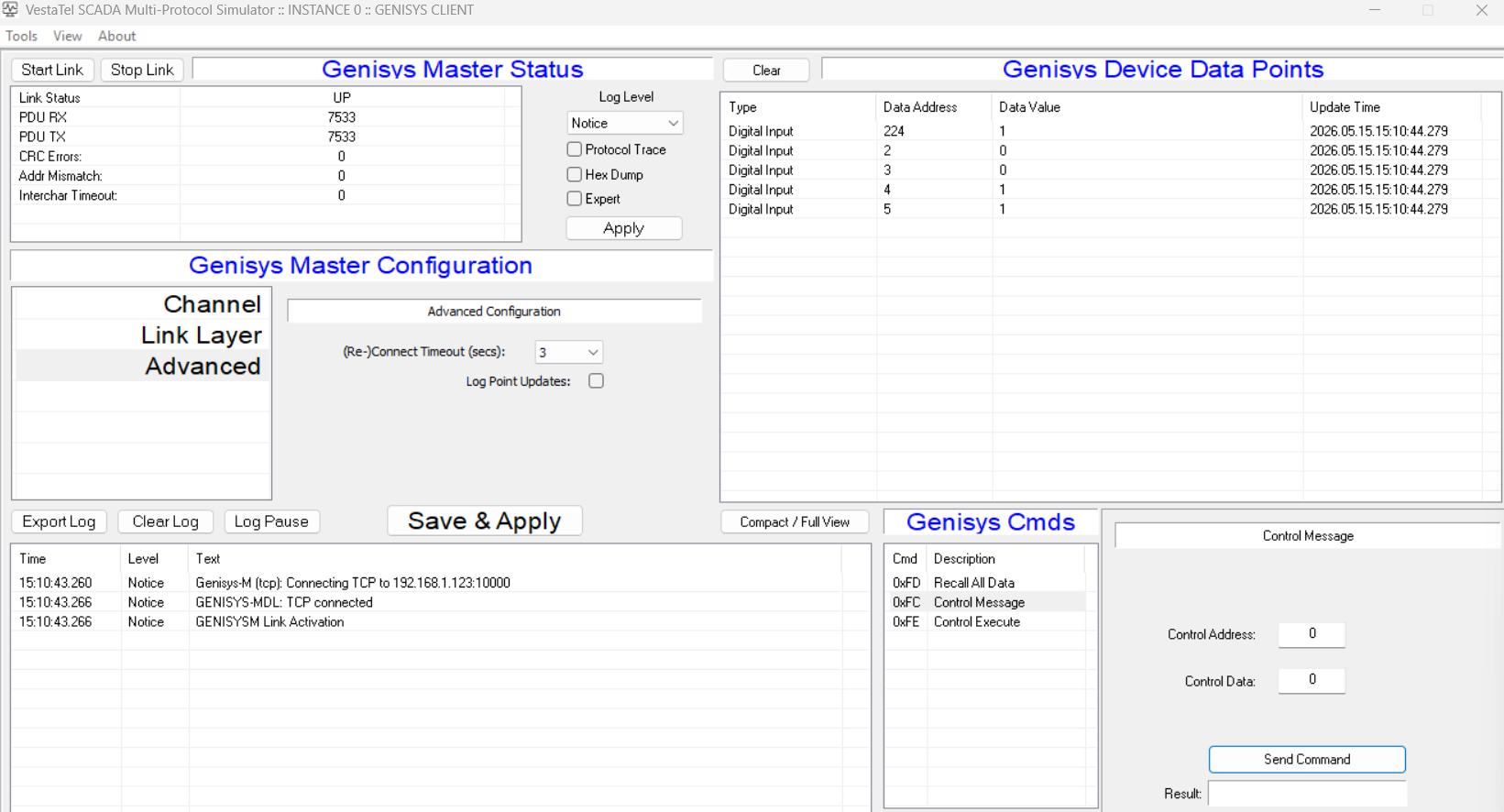
Once the simulator was operational, the actual embedded implementation progressed much faster.
The industrial router needed to expose digital IO points over Genisys protocol, effectively allowing the router to function as a lightweight RTU inside a SCADA system.
Using the enhanced simulator made it possible to:
Instead of spending development time adapting testing scripts, the focus could remain on the embedded application itself.
After the initial client/master implementation proved successful, the simulator was later extended further with:
This made it possible not only to test embedded router implementations, but also to simulate larger SCADA communication environments directly from the VestaTel platform.
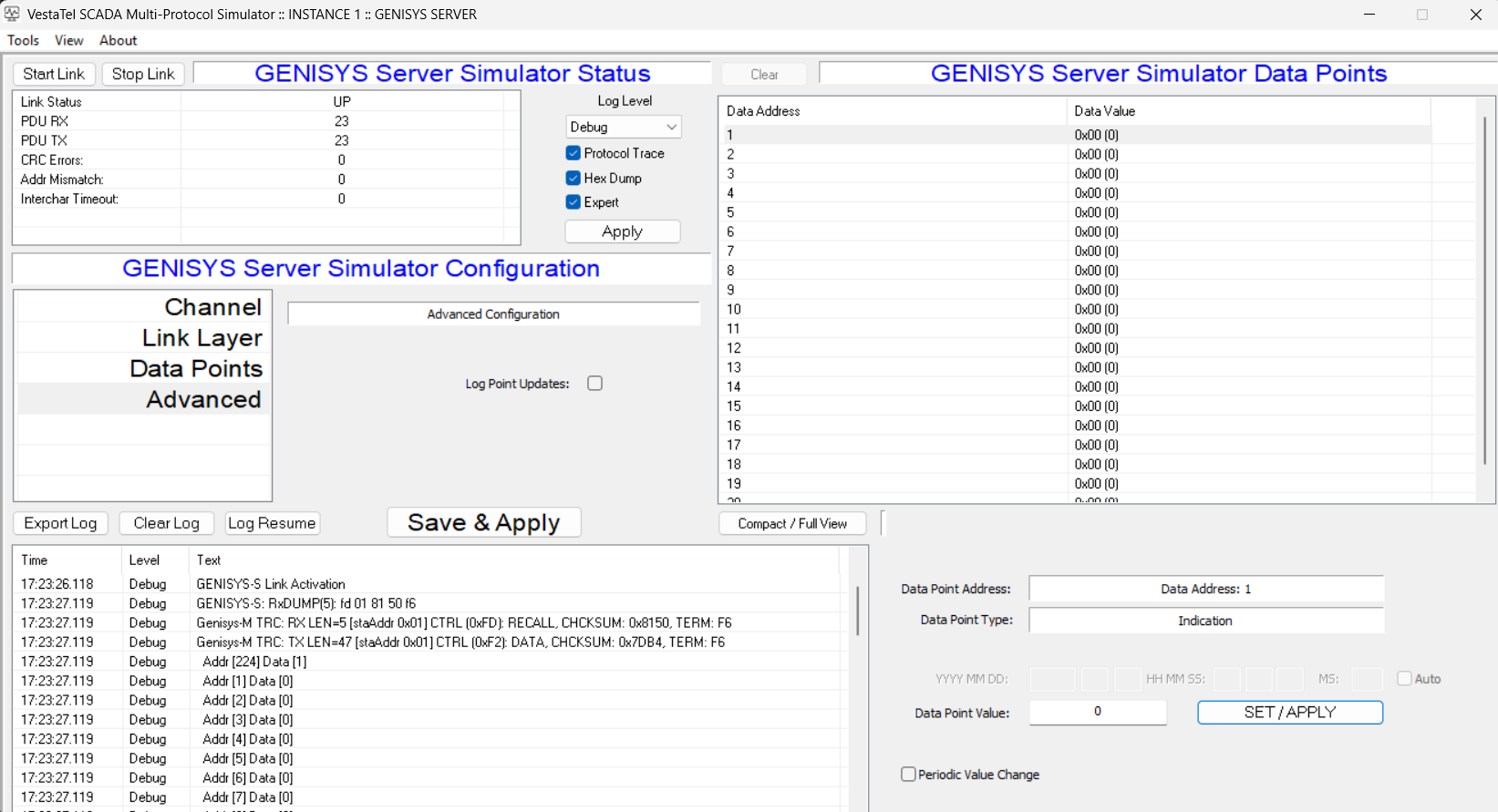
One thing repeatedly reinforced during industrial communication projects is that protocol tooling quality has a direct impact on engineering productivity.
A good simulator provides:
Especially in embedded environments where debugging can already be difficult, having an integrated and interactive protocol simulator becomes a major productivity advantage.
What began as a requirement to implement Genisys support for an industrial router ultimately resulted in a substantial improvement to the development toolchain itself.
By integrating Genisys directly into the VestaTel SCADA Multi-Protocol Simulator, protocol development and validation became dramatically more efficient, allowing the embedded RTU functionality to be completed significantly faster.
In industrial protocol engineering, robust development and simulation tools are often just as important as the protocol implementation itself.